
Overview
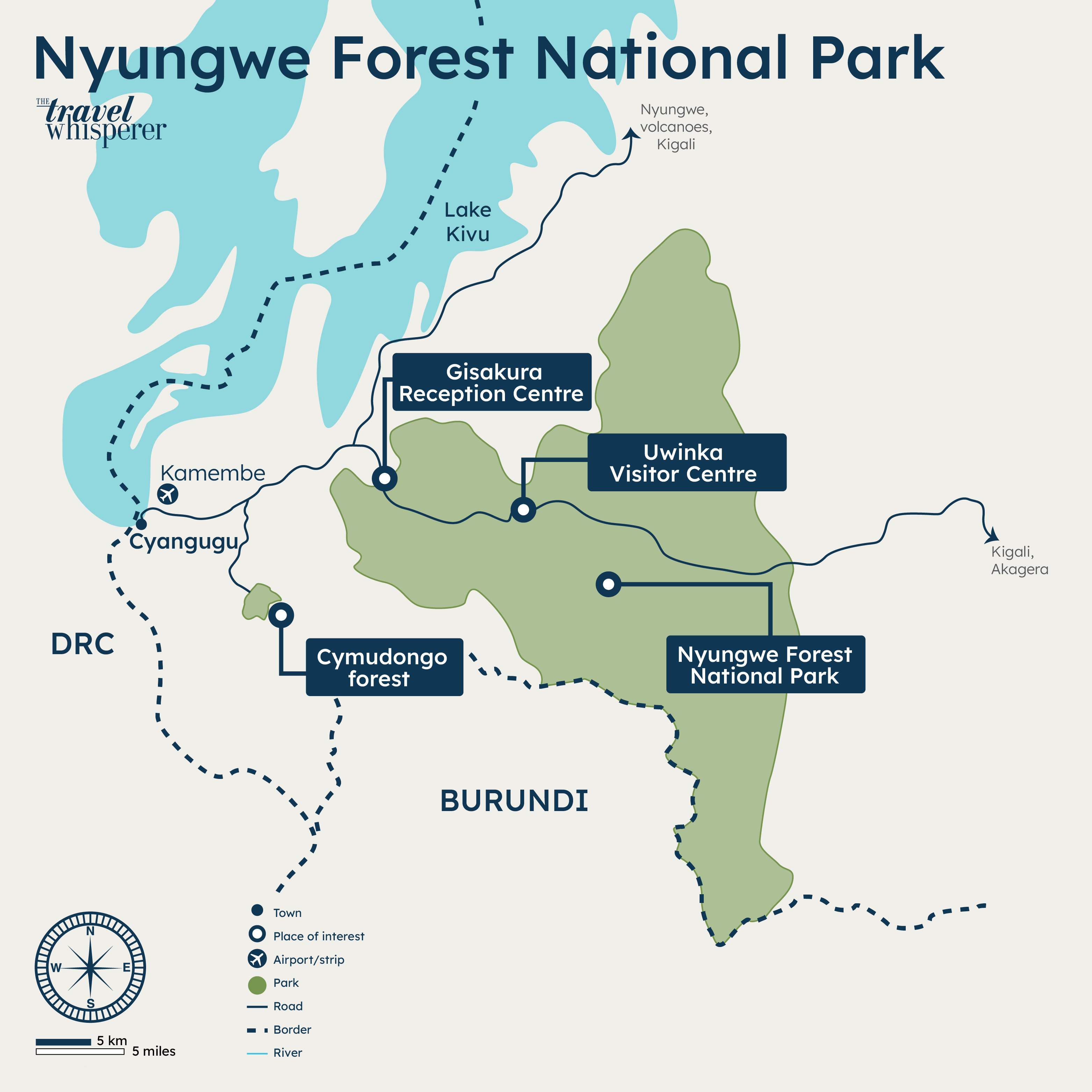
Known for its rich biodiversity and stunning beauty, Nyungwe Forest is one of Africa’s largest and oldest rainforests. Spanning over 1,000km², it is recognizable by its dense canopy and a network of well-maintained hiking trails, including the famous Canopy Walk – a unique vantage point to observe the rainforest’s upper sections. Most tourist attractions in Nyungwe, including the Canopy Walk and trekking activities, are located in the western part of the forest.
Nyungwe is just as famous for its incredible variety of primate species – 13 in total – which includes chimpanzees, colobus and golden monkeys. The park provides guided trekking that allows visitors to encounter all of these primates, where guests can learn all about their distinctive behaviors. Nyungwe is also a great destination for birdwatching, with over 300 bird species residing in the forest, and is also home to a number of mammals, reptiles and amphibians.
Accommodation
Our top pick


Going Ape
Nyungwe Forest National Park’s most famous attraction is its primate population. Most notably, the park is a major destination for chimpanzee trekking and is home to two main chimpanzee families. Guests embark on guided treks through the dense rainforest, accompanied by a compulsory guide and a team of knowledgeable rangers. This ensures a safe and enriching experience for both visitors and the park’s wildlife. These treks offer a rare and intimate glimpse into the lives of these highly intelligent and social animals, including their behaviors and interactions within their groups.
In addition to chimpanzees, visitors to Nyungwe can experience a variety of other species, making it a must-visit for wildlife enthusiasts. The park features large populations of colobus monkeys, easily identified by their striking black and white fur and long, flowing tails, who are often seen leaping gracefully through the canopy. Regal golden monkeys are also present in the forest, and are known for their vibrant golden-orange fur and active, playful nature. Observing these spectacular simians makes Nyungwe a truly unique wildlife experience.


An Ancient Land
As one of the oldest and largest forests of its kind in Africa, Nyungwe is an ancient landscape that has been evolving for millions of years. The forest’s dense canopy is at high altitude – creating a cool, misty environment – and the dense canopy shelters a myriad of plant species, many of which are endemic or rare. It supports a rich undergrowth that includes a variety of medicinal plants and trees that have stood for centuries. The biodiversity of the forest is, of course, not limited to just plant life – as we’ve seen it also provides a habitat for a wide range of animal species.
Exploring this ancient rainforest provides a profound connection to a bygone world, and visitors can learn about its ecological history and the evolutionary processes that have shaped it. Nyungwe Forest is also a crucial conservation area, preserving a vital piece of Earth’s natural heritage and providing an immersive and educational experience for nature enthusiasts and eco-tourists.
Take a Walk on the Wild Side
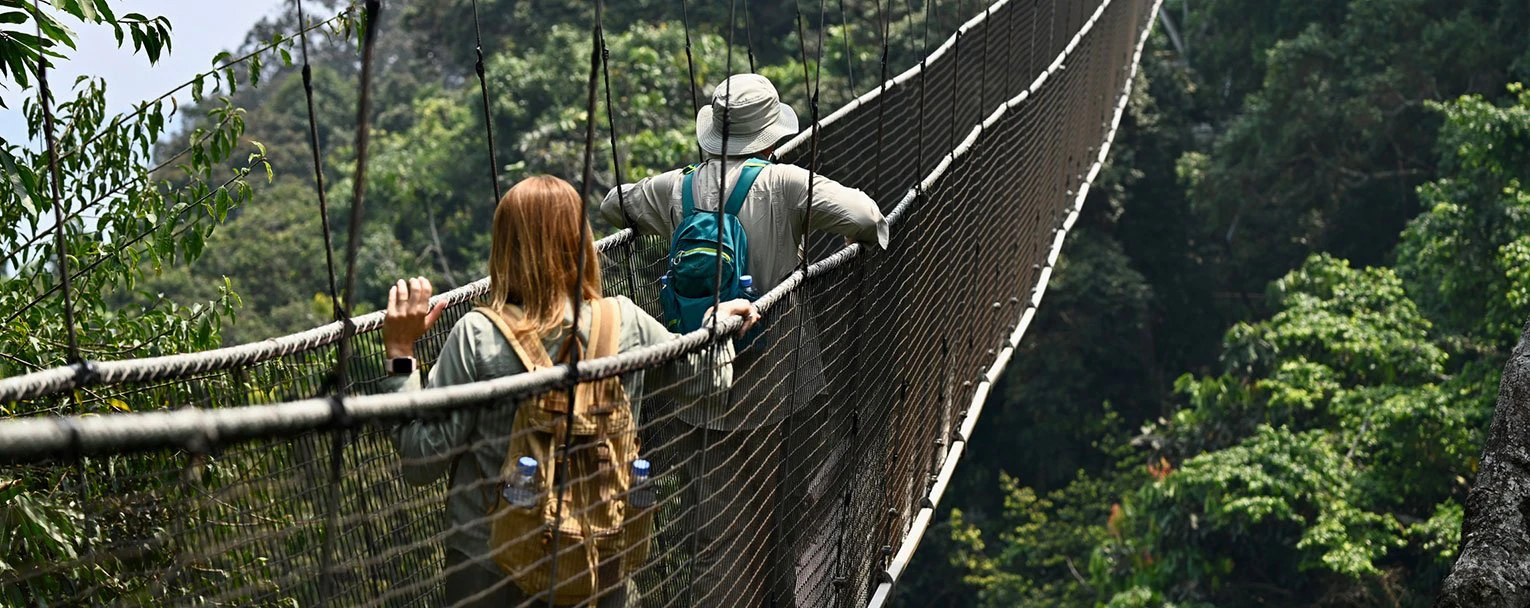
The best way to experience the majesty of Nyungwe is undoubtedly on foot. The Canopy Walk, 160 meters long and suspended 50 meters above the ground, provides panoramic views of the forest and allows guests to observe its wildlife, birds, and exotic plant species from a treetop vantage point.
The Canopy Walk is both thrilling and educational, as guided tours share insights about the park’s animal and plant life. The walk itself is suitable for most age groups, and adds an adventurous element to any visit to Nyungwe Forest; an essential activity for all nature enthusiasts.


Nurturing Nature
As one of Africa’s most intact and undamaged environments, Nyungwe Forest National Park constantly strives to maintain its ecological purity through rigorous conservation efforts aimed at maintaining the forest’s health and ensuring its preservation.
Sustainable tourism is a cornerstone of Nyungwe’s approach, with practices that enhance the guest experience whilst also protecting the environment. Eco-friendly initiatives like sustainable lodge design and low-impact activities help minimize tourism’s environmental footprint, while education and active community involvement ensure that both environmental and social impacts are managed responsibly. By aligning conservation with tourism, Nyungwe provides a model for how to preserve natural beauty while supporting sustainable practices and community engagement.
Experiences

Birdwatching
.gardine-gradient-small

Chimpanzee Trekking
.gardine-gradient-big
Canopy Walks
.gardine-gradient-big

Hiking
.gardine-gradient-small

Stargazing
.gardine-gradient-small
Archery & Spear Throwing
.gardine-gradient-big

Tea Tours
.gardine-gradient-big

Wildlife Conservation
.gardine-gradient-small

Spa & Wellness
.gardine-gradient-small

Cultural Tours
.gardine-gradient-big